The Economics of Rebuilding on Fort Myers Beach: Costs, Confidence, and Long-Term Value
Rebuilding on a barrier island is not a short-term calculation.
On Fort Myers Beach, the economics of redevelopment have evolved significantly since Hurricane Ian. Construction costs are higher. Insurance is more complex. Regulatory requirements are more rigorous. And yet, investment interest has not disappeared—it has become more selective.
Understanding why redevelopment continues requires a closer look at the economic forces shaping the island today.
Higher Costs, Higher Thresholds
Post-storm rebuilding carries a different cost structure than pre-storm development.
Developers and investors must now account for:
Increased construction and labor costs
Enhanced elevation and resiliency requirements
Insurance and risk mitigation expenses
Longer timelines for design, approvals, and delivery
These factors raise the bar for feasibility. Projects must be thoughtfully planned and financially resilient to succeed.
Why Investment Still Makes Sense
Despite these challenges, Fort Myers Beach continues to attract long-term capital.
The reason is simple: fundamentals still matter.
Fort Myers Beach benefits from:
Strong tourism demand and national recognition
Limited supply of developable commercial land
A desirable Gulf-front location that cannot be replicated
Proximity to Southwest Florida’s growing population base
When supply is fixed and demand remains durable, higher costs do not eliminate opportunity—they refine it.
Scarcity Offsets Cost Pressure
On Fort Myers Beach, scarcity plays a critical economic role.
With few remaining Gulf-front parcels and limited opportunities for new commercial inventory, redevelopment sites carry strategic value beyond traditional price-per-square-foot metrics. Scarcity supports long-term pricing power and revenue potential, particularly for well-located assets.
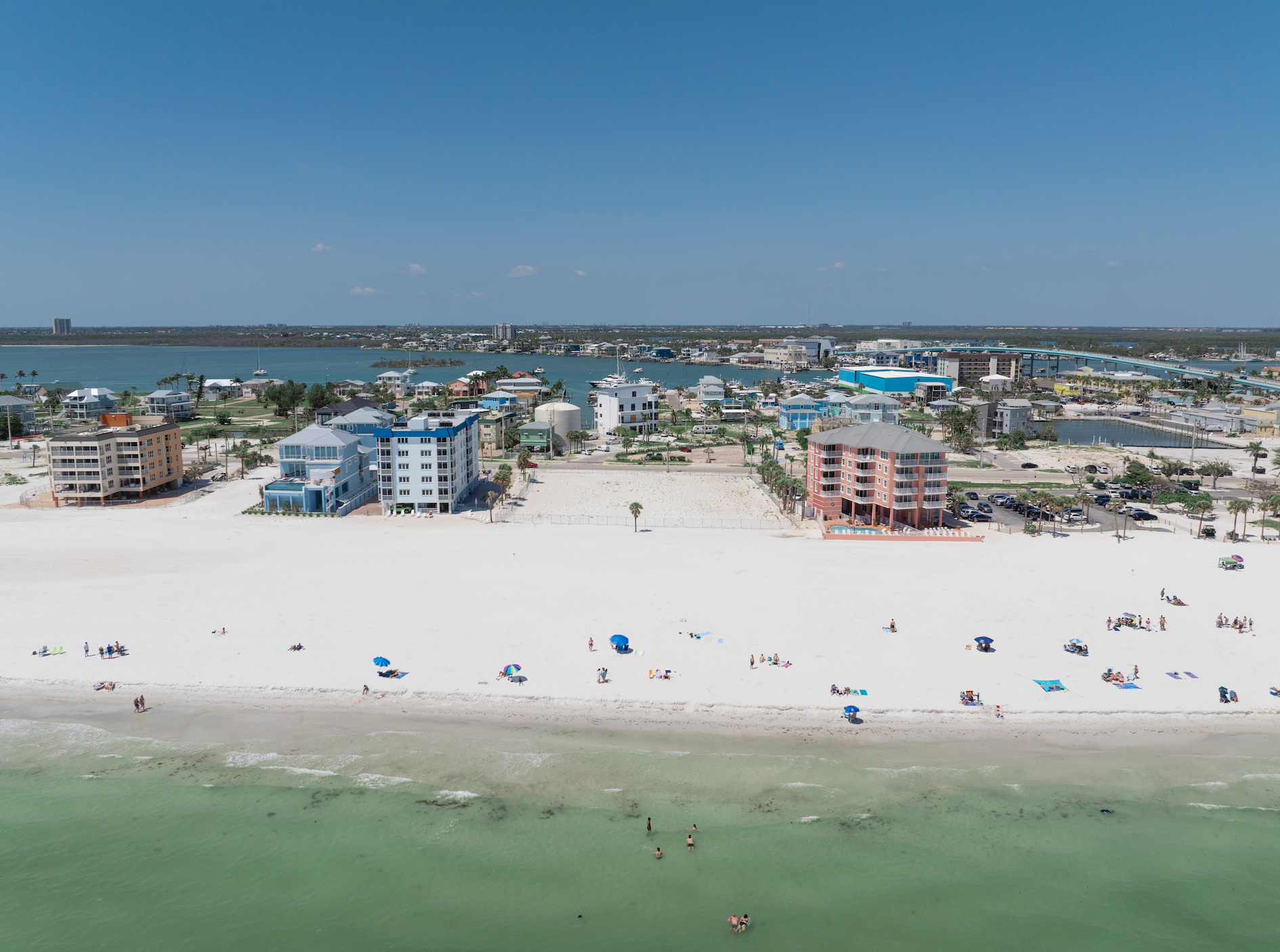
Royal Beach Club reflects this dynamic. As one of the last remaining large-scale Gulf-front redevelopment opportunities on the island, it sits within a category of assets that investors evaluate with a long-term lens.
Tourism, Revenue, and Long-Term Performance
Tourism remains a primary economic driver for Fort Myers Beach.
As rebuilding progresses, visitor confidence continues to return—supporting hospitality, dining, marina activity, and related commercial uses. Projects that align with modern traveler expectations while contributing year-round economic activity are best positioned to perform.
In this environment, redevelopment decisions are increasingly focused on:
Revenue durability over multiple market cycles
Operational flexibility
Alignment with evolving visitor and resident preferences
Royal Beach Club and the Economics of Scale
Scale matters in post-storm redevelopment.
Larger sites are better positioned to absorb higher costs, support resilient design, and accommodate thoughtful site planning. Royal Beach Club’s size and gateway location enhance its economic viability by allowing flexibility in layout, access, and future use.
Rather than forcing density onto constrained parcels, scale allows redevelopment to be intentional rather than reactive.
A Long-Term View of Value
The economics of rebuilding on Fort Myers Beach are not driven by short-term speculation.
They are shaped by long-term confidence in location, scarcity, and the island’s ability to adapt. For investors and developers willing to plan beyond the next cycle, redevelopment represents an opportunity to participate in the island’s next era—one defined by resilience, quality, and enduring appeal.