Scarcity on the Sand: Why Large Gulf-Front Parcels Are Nearly Gone on Fort Myers Beach
Along Florida’s Gulf Coast, beachfront land has always been valuable. Today, it’s becoming something even more powerful: scarce.
On Fort Myers Beach, that scarcity is especially pronounced. As a fully built-out barrier island with environmental constraints, limited remaining parcels, and increasing redevelopment standards, opportunities for large-scale Gulf-front projects are nearly gone.
This reality is reshaping how investors, developers, and communities think about the future of the island—and why sites like Royal Beach Club stand apart.
Why Large Gulf-Front Parcels Are Disappearing
Unlike inland markets where land can be assembled or expanded, barrier islands operate within fixed boundaries. On Fort Myers Beach, nearly every acre has already been accounted for.
Several forces have accelerated the disappearance of large Gulf-front parcels:
Decades of incremental development and subdivision
Environmental protections limiting new density
Post-storm regulations affecting rebuild feasibility
Increased demand for waterfront hospitality and mixed-use concepts
Once a large parcel is redeveloped or divided, its original scale is rarely restored. That makes remaining sites of meaningful size increasingly strategic.
Scarcity as a Driver of Long-Term Value
In real estate, scarcity changes behavior.
As available Gulf-front land diminishes, investors begin to prioritize assets that offer scale, flexibility, and visibility. Scarcity supports long-term value not because demand spikes overnight, but because options quietly disappear.
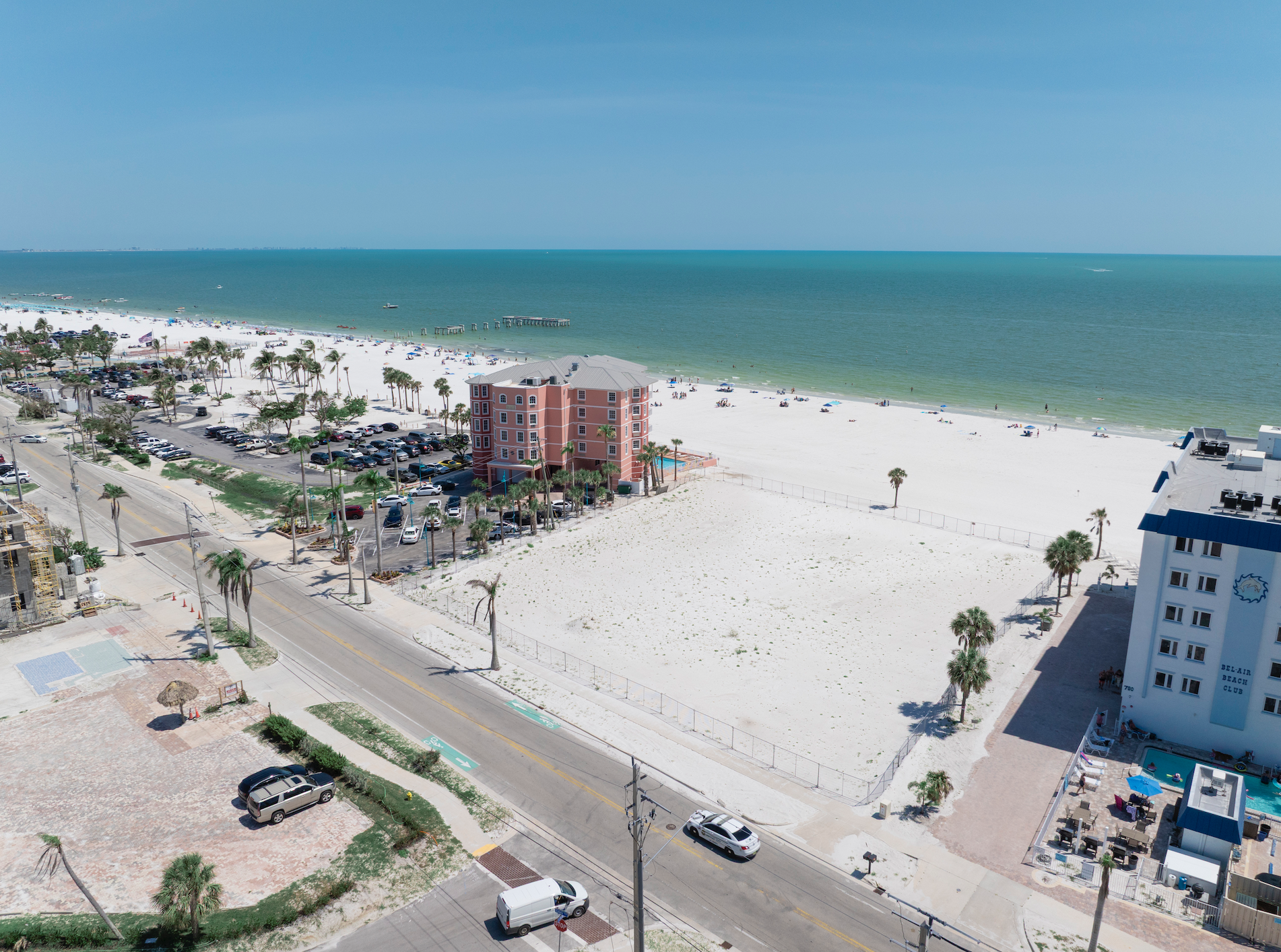
Royal Beach Club represents one of the last remaining contiguous Gulf-front redevelopment opportunities on Fort Myers Beach. Its size, location, and gateway visibility place it in a shrinking category of assets that simply cannot be replicated elsewhere on the island.
The Fort Myers Beach Advantage
Despite rising construction costs and evolving regulatory requirements, Fort Myers Beach continues to benefit from strong fundamentals:
A nationally recognized beach destination
Year-round tourism demand
Limited commercial inventory
Proximity to Southwest Florida’s growing population base
When scarcity meets sustained demand, redevelopment momentum follows.
Rather than deterring investment, limited Gulf-front supply is concentrating interest around sites that can justify long-term capital commitments—particularly those positioned to anchor broader revitalization efforts.
Royal Beach Club in a Supply-Constrained Market
Royal Beach Club’s position at the northern entrance to Estero Island further amplifies its scarcity value. Gateway visibility, combined with direct Gulf frontage, creates a rare opportunity to influence both first impressions and long-term island identity.
In today’s market, properties like this are evaluated not simply by price per acre, but by strategic relevance:
Can the site support resilient, modern development?
Does it align with evolving tourism and lifestyle expectations?
Can it contribute meaningfully to the surrounding community?
Royal Beach Club continues to surface in these conversations because it meets criteria that are becoming increasingly difficult to find.
Looking Ahead
Scarcity is not a temporary condition on Fort Myers Beach—it’s a defining one.
As redevelopment progresses, the island’s remaining Gulf-front parcels will shape its economic future, architectural character, and ability to adapt to changing coastal realities. Royal Beach Club stands as a clear example of how scarcity elevates both opportunity and responsibility.
The question facing Fort Myers Beach is no longer whether redevelopment will happen, but how thoughtfully it will unfold on the few remaining sites that truly matter.